Our 20-minute yoga flow for beginners builds on these poses with a dynamic strength-focused sequence — perfect for days when you have a little more time and energy.
Morning yoga routine for beginners: 7 poses to start your day
Build a morning yoga routine for beginners with these 7 simple poses. Wake up your body, boost energy, and feel calm — all in under 25 minutes, no experience needed.
Yoga & Morning Wellness · Updated 2026
Morning yoga routine for beginners: 7 poses to start every day feeling great
There’s a reason the most consistent yogis practice in the morning. Before the inbox opens, before the commute, before the noise of the day sets in — the morning is the one window of time that’s genuinely yours. A morning yoga routine for beginners doesn’t need to be long or complicated. Seven poses, 20–25 minutes, and you’ll step into your day with a body that feels awake and a mind that feels clear.
If you’ve already tried our 20-minute yoga flow for beginners, this routine is the natural next step — designed specifically for the morning, with gentler opening poses that work with a body that hasn’t moved yet, not against it.
7 poses
gentle sequence
25 min total practice time
0 equipment mat optional
Why a morning yoga routine for beginners works differently to evening yoga
Your body in the morning is a different instrument than it is at night. Muscles are cooler, joints are stiffer, and your nervous system is still transitioning from sleep. That’s not a problem — it’s actually an opportunity. Morning yoga done right uses this stiffness as feedback, encouraging you to move slowly and intentionally rather than push for depth. The result is a practice that’s more sustainable, more meditative, and — paradoxically — more effective at building long-term flexibility than forcing deep stretches on a cold body.
Before you begin
Drink a glass of water first. Your body is mildly dehydrated after sleep and your spinal discs need fluid to decompress safely. Wait at least 30 minutes after eating before practicing or practice on an empty stomach for the best results.
The science behind morning yoga
Practicing yoga in the morning triggers a measurable cortisol response — but in a good way. Morning cortisol is your body’s natural alertness signal, and gentle movement amplifies it just enough to sharpen focus without causing stress. Studies have also shown that morning exercisers are significantly more consistent than those who plan to work out later in the day, simply because life gets in the way less often at 7am than at 7pm.
The breathwork woven through this morning yoga routine for beginners also activates your parasympathetic nervous system — meaning you start the day calm and centred rather than reactive, even before you’ve checked a single notification.
Your 7-pose morning yoga routine for beginners
Move through each pose in order. Hold for 5–8 slow breaths unless otherwise noted. There’s no rush — this sequence is designed to flow gently from lying down to standing, mimicking the natural arc of waking up.
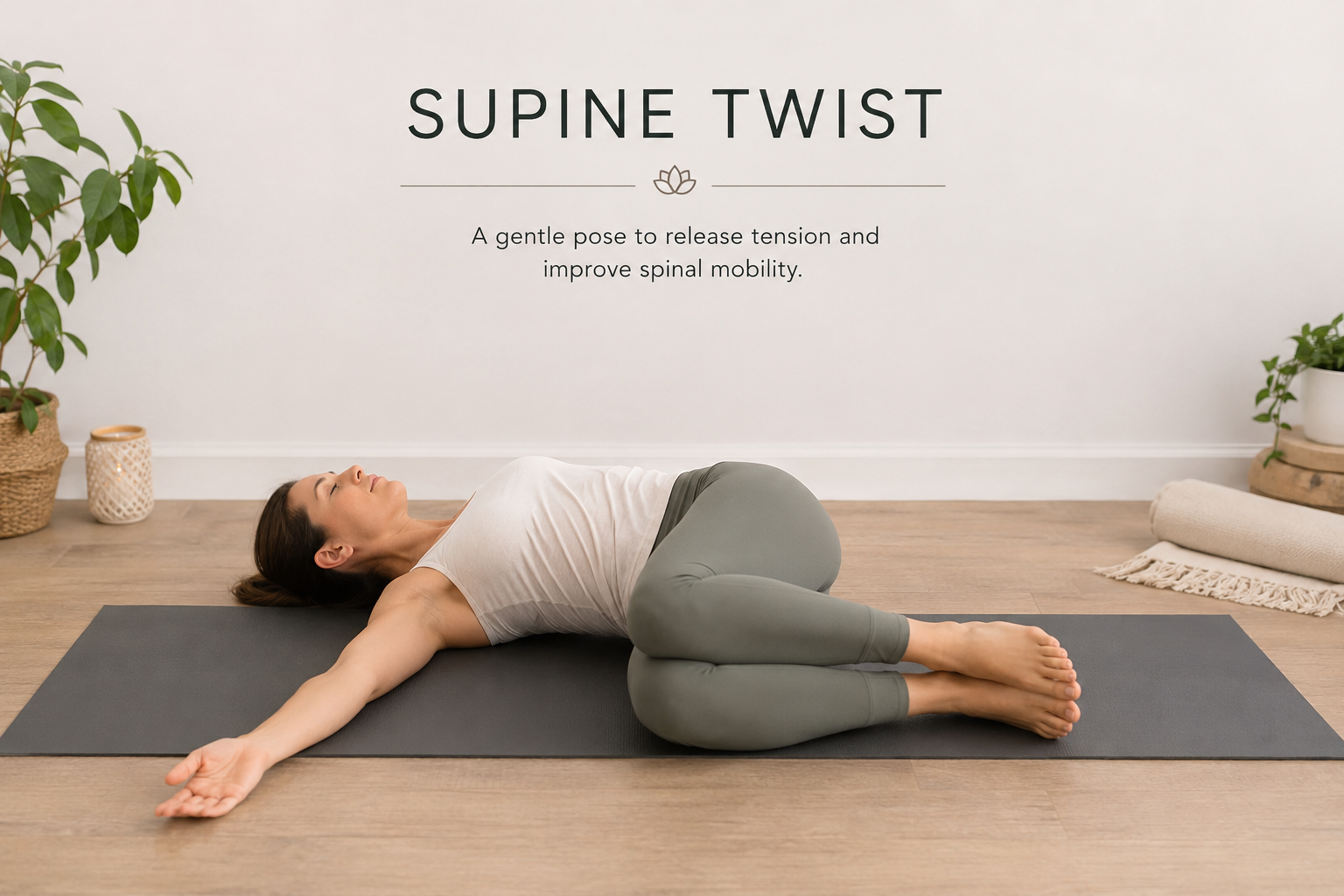
1. Supine twist (Supta Matsyendrasana)
Start lying flat on your back — exactly where you woke up. Draw your right knee to your chest, then let it fall gently across your body to the left. Extend your right arm out to the side and turn your gaze right. This wrings out the spine and wakes up digestion before you’ve even sat up. Hold 5 breaths each side.
- Releases spinal tension
- Stimulates digestion
- Gentle hip opener
- Calms the nervous system
2. Cat-cow (Marjaryasana-Bitilasana)
Come to all fours, wrists under shoulders, knees under hips. Inhale and let your belly drop toward the floor, lifting your head and tailbone (cow). Exhale and round your spine toward the ceiling, tucking chin and pelvis (cat). Move slowly with your breath for 8–10 rounds. This is the single best movement for a stiff morning spine.
- Mobilizes the spine
- Warms up the Spine
- Syncs breathe and movement
- Relieves morning stiffness

3. Child's pose (Balasana)
From all fours, sink your hips back toward your heels and extend your arms forward, forehead resting on the mat. Breathe deeply into your lower back, letting the belly expand with each inhale. This is your reset pose — return to it any time during the routine if you need a moment. Hold for 8 slow breaths.
- Stretches Lower Back
- Opens hips and thighs
- Calming and Restorative
- Decompresses the spine

4. Low lunge (Anjaneyasana)
Step your right foot forward between your hands, lowering your left knee to the mat. Inhale and raise your arms overhead, opening your chest. Most people sit for 8+ hours a day, which tightens the hip flexors severely. This pose directly counters that — making it one of the most important moves in any morning yoga routine for beginners. Hold 6 breaths each side.
- Opens Hip Flexors
- Strengthens legs
- Improves posture
- Energizing

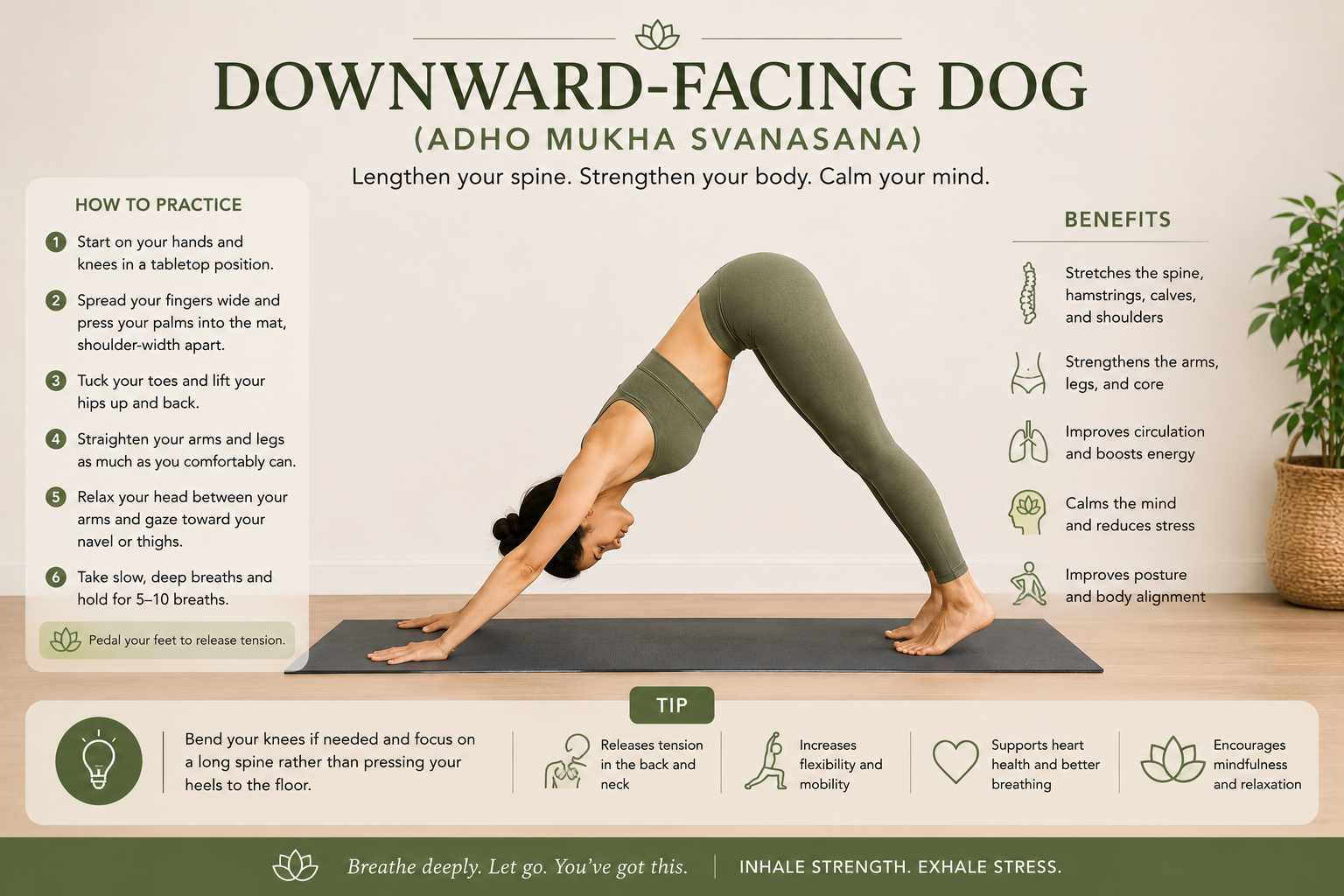
5. Downward-facing dog (Adho Mukha Svanasana)
From a plank position, lift your hips up and back to form an inverted V. Pedal your heels gently — one at a time — to stretch the calves and hamstrings. In the morning, your hamstrings will be tighter than usual, so bent knees are perfectly fine. Focus on lengthening the spine rather than straightening the legs. Hold for 8 breaths.
- Full Body Stretches
- Boost Blood Flow to the Brain
- Strengthens arms and core
- Energizing inversion
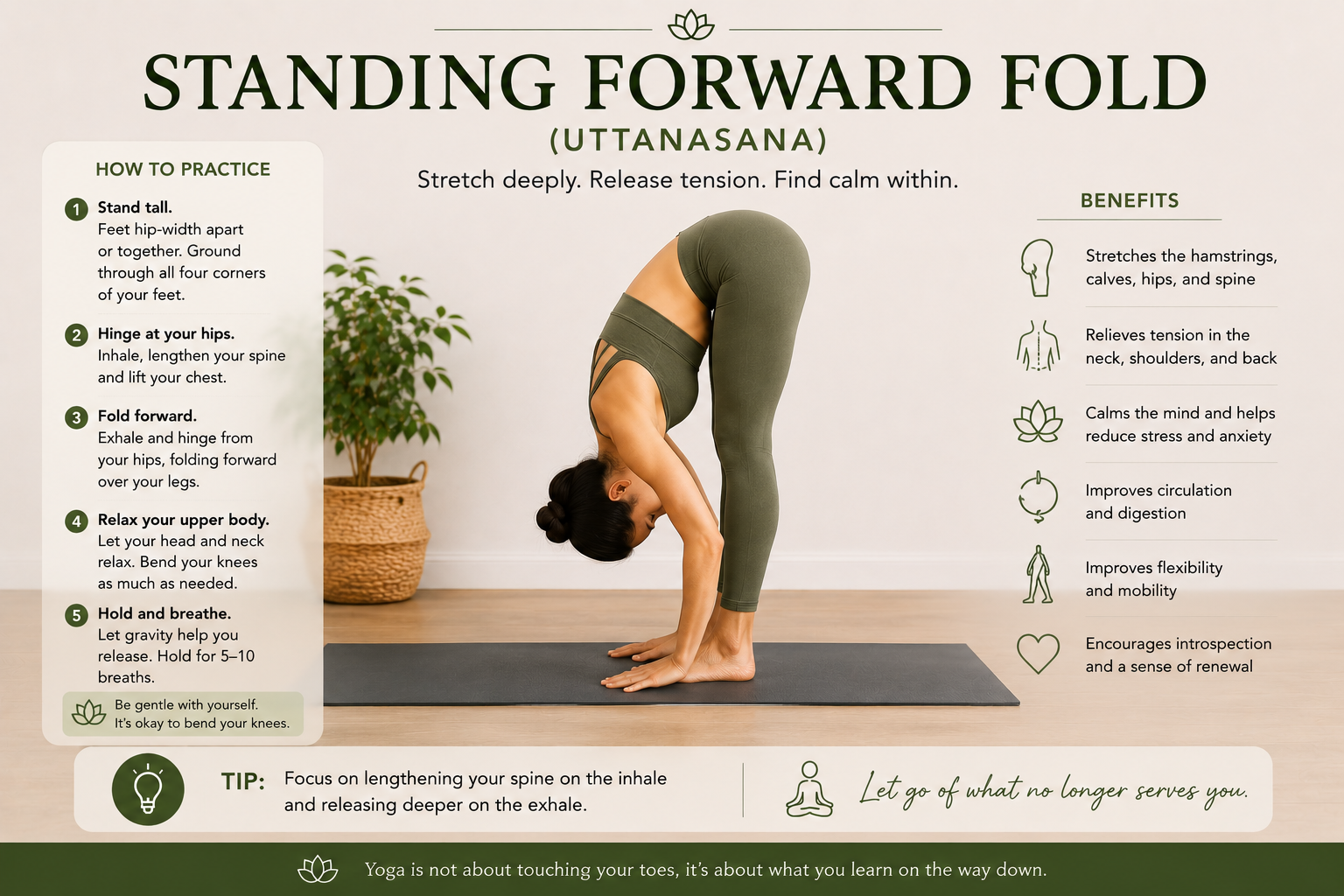
6. Standing forward fold (Uttanasana)
Walk your feet to your hands and slowly roll up to standing, one vertebra at a time. Then hinge from the hips and fold forward, letting your head hang heavy. Grab opposite elbows and sway gently side to side. This is deeply decompressive for the neck and upper back — areas that carry the most tension after sleep. Hold for 8 breaths.
- Releases neck tension
- Stretches Hamstrings
- Calms the Mind
- Improves circulation
7. Mountain pose with breathwork (Tadasana)
Stand tall, feet hip-width apart, arms at your sides, palms facing forward. Close your eyes. Take 5 deep belly breaths — inhale for 4 counts, hold for 2, exhale for 6. This closing breathwork activates your parasympathetic nervous system and sets an intentional, calm tone for everything that follows. You’ve completed your morning yoga routine for beginners — now go own your day.
- Grounds and Centers
- Activates parasympathetic system
- Improves posture awareness
- Sets tone for the day
Ready to take your practice further?
How to build a consistent morning yoga habit
The hardest part isn’t the yoga — it’s the getting started. Here’s the system that works for most beginners.

Week 1–2
Lower the bar drastically
Commit to just 3 poses a morning — not the full 7. The goal is to make showing up feel effortless. You can always do more, but the habit comes first.

Week 3–4
Add the full sequence
Once rolling out the mat feels automatic, move through all 7 poses. Track your streak — even a simple tick on a calendar creates powerful motivation to keep going.

Month 2+
Layer in the flow
On days when you have more time and energy, follow this routine with our 20-minute yoga flow for beginners for a complete mind-body practice.
Habit stacking tip
Place your yoga mat out the night before, right next to your bed. The visual cue alone increases follow-through by over 40% according to habit research. Make it impossible not to see it when you wake up.
Learn more & go deeper
The article is a beginner-friendly, flow-style yoga sequence that guides you through classic poses — including Child's Pose, Cat-Cow, High Lunge, and Chair Pose — designed to be done in 10 minutes, either as a daily morning routine or whenever you need a slow, gentle practice.
This 11 minute Morning Yoga practice is perfect for when you first wake up - or for when you need a little wake-up any time of day! This session is short but impactful. Start your day off right with intention, efficient movement, and mindful breathwork.
Break old habits and learn to create new ones in this guide.
A motivating, well-rounded read that goes far beyond the usual flexibility and fitness benefits.
Frequently Asked Questions
Should I do Yoga before or after I eat?
Before, ideally. Practising on an empty or nearly empty stomach means your body isn’t diverting blood flow to digestion, which allows deeper twists and more comfortable inversions. If you’re someone who feels light-headed without food, a small snack like a banana 30 minutes before is fine — just avoid a full meal.
How long should a morning yoga routine for beginners take?
This sequence takes 20–25 minutes at a comfortable pace. If you’re short on time, the first four poses alone take about 10 minutes and still deliver the core benefits — spinal mobility, hip opening, and a calm nervous system. Any movement is better than none.
What if I'm not a morning person?
Start with just poses 1 and 2 while still in bed — the supine twist and cat-cow can both be done on your mattress. Many people find that once they begin moving, getting up becomes much easier. After two weeks, the body adapts and mornings genuinely start to feel more natural.
How many days a week should I do this routine?
Daily is ideal for habit formation — the consistency matters more than the frequency at this stage. That said, even 4–5 days a week will deliver meaningful results. If you miss a day, don’t try to “make it up” — just show up the next morning. Guilt is the enemy of consistency.
When should I move on from a beginner routine?
When this sequence starts to feel comfortable and you can hold each pose for the full breath count without struggling, you’re ready to progress. A good next step is adding our 20-minute yoga flow for beginners on alternate mornings, which introduces more dynamic movement and builds on the foundation this routine creates.