How to Lose Water Weight Safely: 10 Simple Ways to Reduce Water Retention and Bloating
Have you ever stepped on the scale and wondered how you seemingly gained several pounds overnight?
Before assuming that all of it is body fat, take a breath. Sudden changes on the scale are often caused by water retention—not actual fat gain.
Water weight can make your stomach feel bloated, your face appear puffy, and your rings or shoes feel tighter than usual. It can happen after eating a salty meal, traveling, sitting for long periods, changing your carbohydrate intake, starting a new medication, or experiencing hormonal fluctuations.
Although temporary water retention is common, it can be uncomfortable and frustrating—especially when you are trying to track your weight or improve how you feel.
The good news is that there are several simple ways to help your body restore its normal fluid balance. In this guide, we’ll look at how to lose water weight safely, what causes it, how it differs from body fat, and when persistent swelling may require medical attention.
This article is for general informational purposes only and is not a substitute for medical advice, diagnosis, or treatment.
Quick Tip
What Is Water Weight?
Water weight is extra fluid being temporarily stored in your body’s tissues.
Water naturally makes up a significant portion of the human body and is essential for nearly every bodily function. Your body constantly adjusts its fluid levels based on hydration, sodium, carbohydrates, hormones, physical activity, medications, and other factors.
Sometimes that balance shifts and your body holds onto more fluid than usual. You may notice:
- A sudden change on the scale
- Puffiness in your face
- Abdominal bloating
- Swollen fingers, ankles, or feet
- Rings or shoes feeling tighter
- Indentations left behind by socks
- Weight that fluctuates noticeably from one day to the next
Water weight can appear quickly and often disappears relatively quickly once the underlying trigger resolves.
Body fat works differently. Gaining a pound of body fat requires a sustained calorie surplus over time. If the scale jumps several pounds after a restaurant meal, vacation, menstrual-cycle change, or unusually inactive day, that increase is unlikely to represent several pounds of newly gained fat.
Water Weight vs. Body Fat: How Can You Tell?
Water retention and body-fat gain can both change your weight, but they usually follow different patterns.
| Water Weight | Body Fat |
|---|---|
| Can appear within hours or days | Usually accumulates gradually |
| May fluctuate noticeably from day to day | Changes more consistently over time |
| Often causes puffiness or swelling | Does not typically cause sudden swelling |
| May affect the face, hands, abdomen, ankles, or feet | Distribution varies by genetics and body composition |
| Can decline quickly when fluid balance returns to normal | Requires a sustained energy deficit to reduce |
The scale cannot tell you exactly what caused a change. Instead of reacting to one weigh-in, look at your overall trend across several weeks.
A sudden increase after salty food, travel, hormonal changes, or a change in routine is more likely to include water weight. A gradual increase that remains consistent for several weeks may reflect a change in body composition.
It is also possible to experience digestive bloating without retaining a significant amount of water. Gas, constipation, food intolerances, and eating a large meal can all make your abdomen feel temporarily swollen without creating true fluid retention.
Why Is My Body Retaining Water?
Water retention can have many causes, and experiencing it does not necessarily mean that you have done something wrong.
Common reasons your body may temporarily hold additional fluid include:
- Eating more sodium than usual
- Eating more carbohydrates than usual
- Dehydration
- Hormonal changes or menstruation
- Sitting or standing in one position for a long time
- Traveling, especially during a long flight or car ride
- Hot weather
- Certain medications
- Changes in physical activity
- Poor sleep
- Some medical conditions
Restaurant meals, packaged foods, pizza, soups, sandwiches, sauces, deli meats, and salty snacks can contain significantly more sodium than you might expect. The American Heart Association notes that most dietary sodium comes from packaged and processed foods rather than the salt shaker.
Hormones can also affect how the body regulates fluid. Many women notice temporary bloating and changes on the scale before or during their menstrual period or as their hormones change during perimenopause.
The cause matters. Mild puffiness after a salty meal is different from persistent or unexplained swelling in the legs, feet, hands, or face. If the swelling is sudden, severe, painful, or does not resolve, talk with a healthcare professional instead of trying to treat it with a homemade “detox.”
How to Lose Water Weight Safely
If your water retention is mild and related to food, travel, hormones, or changes in your routine, the following habits may help your body return to its usual fluid balance.

1. Drink More Water
It may sound backward, but drinking water can help when you feel like you are retaining water.
When you are dehydrated, your body may attempt to conserve the fluid it has available. Consistently drinking water throughout the day supports your kidneys and your body’s natural fluid-regulation processes.
You do not need to force yourself to drink gallons of water. Instead:
- Keep a refillable bottle nearby.
- Drink regularly throughout the day.
- Have water with meals.
- Add lemon, cucumber, berries, or mint if you dislike plain water.
- Drink more when exercising or spending time in hot weather.
Your fluid needs depend on your size, activity level, environment, health, and medications. Pale-yellow urine generally suggests that you are adequately hydrated, although urine color can also be affected by vitamins and medications.
If you want to make water more interesting, try my chia seed water for weight loss recipes. Chia water is not a fat-burning or water-flushing miracle, but it can be a flavorful way to add fluid and fiber to your day.
4. Move Your Body

Movement supports circulation and can help prevent fluid from pooling in your lower legs and feet.
You do not need to complete an intense workout. Gentle movement can be especially helpful after traveling, working at a desk, or spending a long time on your feet.
Try:
- Taking a 10- to 20-minute walk
- Stretching your calves and ankles
- Practicing gentle yoga
- Standing up at least once each hour
- Marching in place
- Taking the stairs
- Doing a short mobility routine
Exercise also causes sweating, which temporarily reduces fluid. However, a lower number on the scale immediately after a sweaty workout reflects fluid loss—not instant body-fat loss. Rehydrate afterward rather than trying to preserve that temporary decrease.
Looking for a workout? Check out my post on quick HIIT Workouts!
3. Eat Potassium-Rich Foods

Potassium and sodium work together to regulate fluid balance. Eating potassium-rich whole foods may help counter some of sodium’s effects.
Good sources of potassium include:
- Potatoes and sweet potatoes
- Bananas
- Avocados
- Spinach and other leafy greens
- Tomatoes
- White beans and kidney beans
- Lentils
- Oranges
- Cantaloupe
- Plain yogurt
- Salmon
- Winter squash
Rather than immediately buying a supplement, focus on adding fruits, vegetables, beans, dairy, fish, and other naturally potassium-rich foods.
Potassium supplements and potassium-based salt substitutes are not appropriate for everyone. They can be dangerous for people with kidney disease and for those taking certain medications. The American Heart Association recommends checking with a healthcare professional before using either.
5. Avoid Sitting or Standing Still for Too Long
Long flights, road trips, desk work, and jobs that require hours of standing can allow fluid to collect in the lower body.
If possible:
- Change positions regularly.
- Take short walking breaks.
- Flex and point your feet.
- Make circles with your ankles.
- Avoid sitting with your legs crossed for long periods.
- Elevate your legs when resting.
For mild swelling, elevating the affected leg above heart level may help fluid move away from the area. Compression socks may also help some people, particularly during travel, but ask a healthcare professional whether they are appropriate if you have circulation problems or unexplained swelling.

6. Return to a Balanced Carbohydrate Intake
Carbohydrates are stored in the body as glycogen, primarily in the muscles and liver. Glycogen binds with water, so eating more carbohydrates than usual can cause a temporary increase on the scale.
This is especially noticeable after vacations, holidays, celebrations, or restaurant-heavy weekends.
It does not mean that carbohydrates instantly turned into several pounds of fat.
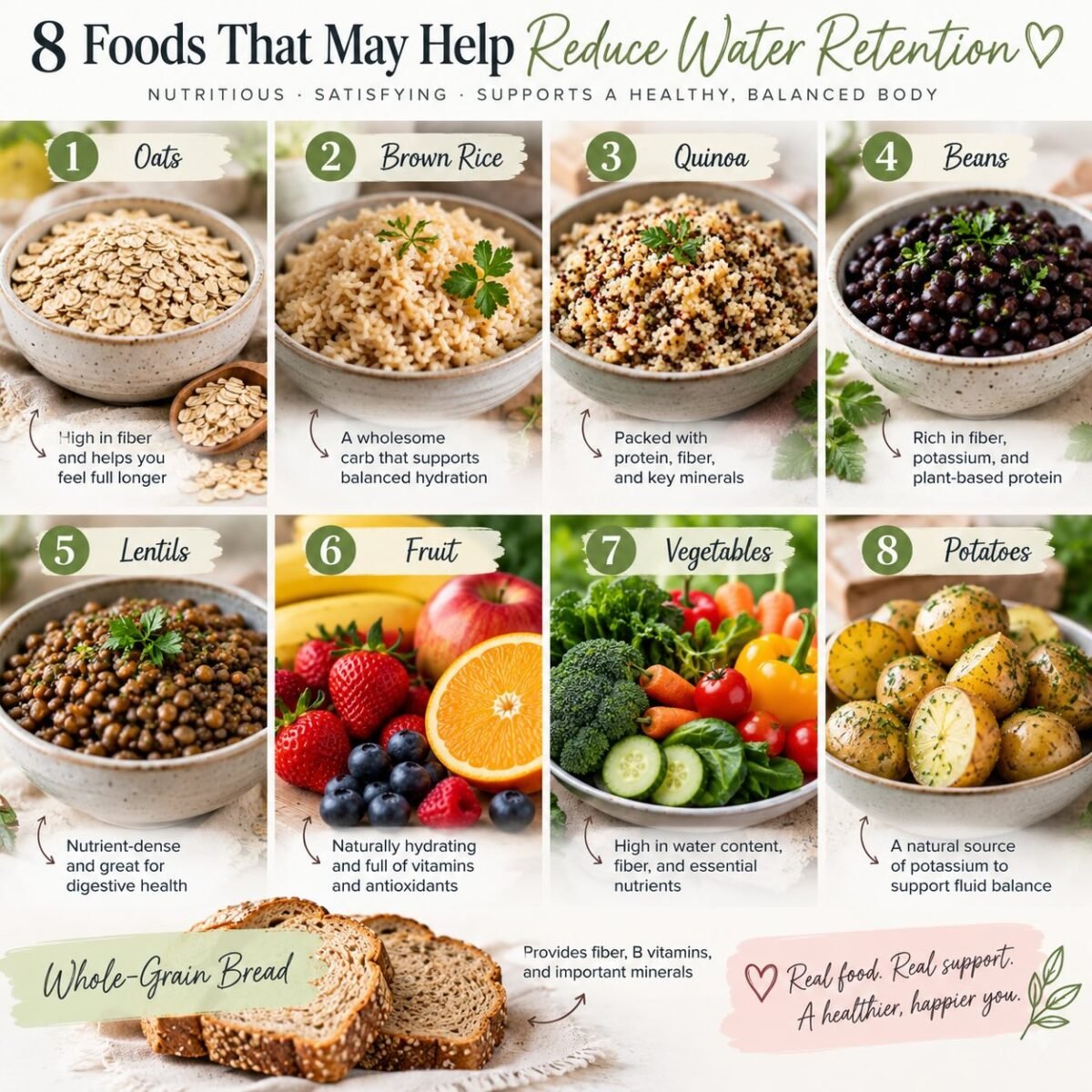
There is usually no need to eliminate carbohydrates or begin an extreme low-carb diet. Simply return to your normal eating routine and emphasize satisfying, fiber-rich sources such as:
- Oats
- Brown rice
- Quinoa
- Beans
- Lentils
- Fruit
- Vegetables
- Potatoes
- Whole-grain bread
As your glycogen and sodium levels stabilize, some of the extra water may naturally be released.
Want to make hydration easier?
7. Eat Fewer Highly Processed Foods
A poor night of sleep can affect hunger, stress, food choices, inflammation, and the hormones involved in fluid regulation.
You may also be more likely to reach for salty convenience foods and sugary drinks when you are exhausted.
Support better sleep by:
- Keeping a reasonably consistent bedtime
- Limiting caffeine late in the day
- Reducing bright screens before bed
- Keeping the bedroom cool and dark
- Getting outside during daylight
- Creating a brief wind-down routine
One night of better sleep may not immediately eliminate water retention, but consistent sleep supports the systems responsible for maintaining a healthy fluid balance.
8. Prioritize Sleep
A poor night of sleep can affect hunger, stress, food choices, inflammation, and the hormones involved in fluid regulation.
You may also be more likely to reach for salty convenience foods and sugary drinks when you are exhausted.
Support better sleep by:
- Keeping a reasonably consistent bedtime
- Limiting caffeine late in the day
- Reducing bright screens before bed
- Keeping the bedroom cool and dark
- Getting outside during daylight
- Creating a brief wind-down routine
One night of better sleep may not immediately eliminate water retention, but consistent sleep supports the systems responsible for maintaining a healthy fluid balance.
9. Limit Alcohol
Alcohol may initially increase urination, but it can also contribute to dehydration. It is frequently consumed alongside salty restaurant food, pizza, chips, or other foods that encourage water retention.
This combination can leave you feeling dehydrated, puffy, and bloated the following day.
If you drink alcohol:
- Alternate alcoholic drinks with water.
- Avoid drinking on an empty stomach.
- Pay attention to salty snacks and mixers.
- Rehydrate afterward.
- Give your body time to return to normal.
You do not need a special detox drink the next morning. Water, balanced meals, gentle activity, and time are generally more helpful.
10. Skip Extreme Detoxes and Unprescribed Water Pills
When you feel uncomfortable and puffy, a product promising to “flush five pounds overnight” can be tempting.
Over-the-counter water pills, laxatives, extreme cleanses, and large amounts of so-called natural diuretics can cause:
- Dehydration
- Dizziness
- Digestive distress
- Electrolyte imbalances
- Abnormal heart rhythms
- Medication interactions
Even natural ingredients can have powerful effects and are not automatically safe.
Prescription diuretics are valuable treatments for certain medical conditions, but they should be used under medical supervision. A healthcare professional can determine whether swelling requires medication and monitor kidney function and electrolyte levels.
The number on the scale may temporarily drop after fluid loss, but dehydration is not healthy or sustainable weight loss.
Foods That May Help Reduce Water Retention
No individual food can instantly flush retained water from your body. However, foods containing water, potassium, fiber, and other nutrients can support normal hydration and fluid balance.
Helpful options include:
Cucumber
Cucumber contains a high percentage of water and works well in salads, infused water, and snacks.
Watermelon
Watermelon provides fluid and potassium. It can be especially refreshing after spending time outdoors in warm weather.
Bananas
Bananas are a convenient source of potassium and pair well with yogurt, oatmeal, smoothies, or nut butter.
Potatoes and Sweet Potatoes
Both contain potassium, particularly when the skin is included. Baking or roasting them at home gives you more control over added sodium.
Avocado
Avocado provides potassium, fiber, and unsaturated fats that can make meals more satisfying.
Leafy Greens
Spinach, Swiss chard, and other greens provide potassium and magnesium along with fiber and other nutrients.
Beans and Lentils
Beans and lentils supply potassium, fiber, carbohydrates, and plant-based protein. If you use canned beans, draining and rinsing them can reduce some of the sodium.
Plain Yogurt
Yogurt provides potassium and protein. Choose a lower-sugar variety and add your own fruit if you prefer sweetness.
Citrus Fruit
Oranges and grapefruit contribute fluid and potassium. Grapefruit can interact with certain medications, so check with your pharmacist if you take prescription medicine.
Salmon
Salmon provides protein and omega-3 fats. Choose fresh or lower-sodium varieties when reducing sodium is your goal.
Foods That Can Make Water Retention Worse
You do not have to permanently ban any particular food. However, if you feel unusually puffy, reducing the following for a few days may help:
- Processed meats
- Fast food
- Pizza
- Salty soups
- Chips and crackers
- Frozen dinners
- Instant noodles
- Bottled sauces and dressings
- Large restaurant meals
- Alcohol
- Highly refined carbohydrates
- Very sugary foods and drinks
Instead of labeling these foods as “bad,” look at the overall pattern. A restaurant meal may temporarily raise your weight because of sodium, carbohydrates, food volume, and fluid—not because one dinner ruined your progress.
Frequently Asked Questions About Losing Water Weight
How Long Does Water Weight Last?
Temporary water retention may resolve within a day or several days, depending on its cause.
Water related to a salty meal, travel, or a temporary change in carbohydrate intake often improves once you resume your usual routine. Hormonal water retention may follow a monthly pattern and resolve as hormone levels change.
Persistent swelling should not be treated as a cosmetic weight-loss problem. If it lasts, repeatedly returns, becomes worse, or has no obvious explanation, schedule an appointment with a healthcare professional.
When Should You See a Doctor About Water Retention?
Occasional mild bloating or puffiness is common. However, edema can sometimes be associated with a blood clot, circulation problem, medication reaction, or heart, kidney, or liver condition.
Seek prompt medical advice if:
- Swelling is new or unexplained.
- It affects only one leg or one side of the body.
- The swollen area is painful, warm, or red.
- The skin remains deeply indented after you press it.
- Swelling continues for more than a few days.
- It is becoming progressively worse.
- You recently started a medication.
- You have a history of heart, kidney, liver, or circulation problems.
Seek emergency care for swelling accompanied by:
- Chest pain or pressure
- Shortness of breath
- Difficulty breathing
- Coughing up blood
- Fainting, severe dizziness, or confusion
- Sudden painful swelling in one leg
These symptoms can indicate a serious medical condition. The Mayo Clinic advises seeking immediate care for unexplained leg swelling or pain accompanied by chest pain or trouble breathing.
How much water weight can you gain?
The amount varies considerably. Sodium, carbohydrates, hormones, digestion, activity, and hydration can cause the scale to fluctuate from one day to the next.
A rapid change is more likely to include water and food weight than body fat. Look at trends over time instead of allowing one weigh-in to determine how you feel about your progress.
Can drinking more water help you lose water weight?
Maintaining adequate hydration supports normal kidney function and fluid regulation. If dehydration is contributing to water retention, drinking water regularly may help your body restore balance.
More is not always better. Excessive water intake can also disrupt electrolyte levels.
What is the fastest way to lose water weight?
There is no safe guaranteed method for instantly eliminating water weight.
The most reasonable approach is to return to your normal routine: drink water, reduce unusually salty foods, eat potassium-rich whole foods, move gently, sleep, and give your body time.
Does lemon water reduce water retention?
Lemon water is still primarily water. It can support hydration if adding lemon makes you more likely to drink it, but lemon does not independently “detox” the body or melt fat.
Does chia seed water reduce water retention?
Chia seed water provides fluid and fiber, but there is no evidence that it directly flushes retained water from the body.
It can still be included as part of a balanced routine if you enjoy it and tolerate the additional fiber.
Does coffee help you lose water weight?
Caffeine has a mild diuretic effect, particularly for people who do not regularly consume it. However, coffee is not a treatment for fluid retention, and excessive caffeine can cause anxiety, sleep disruption, rapid heartbeat, or digestive discomfort.
Regular coffee and tea can contribute to daily fluid intake for most people.
Can you lose water weight overnight?
Your weight may be lower in the morning because you lose fluid through breathing, perspiration, and urination overnight. This is a normal fluid shift, not overnight fat loss.
Do carbohydrates cause water retention?
Stored carbohydrates bind with water, so eating more carbohydrates than usual can temporarily increase scale weight. That does not make carbohydrates inherently unhealthy or mean you must eliminate them.
Can stress cause water retention?
Stress can affect sleep, food choices, hormones, digestion, and daily activity, all of which can influence how bloated or puffy you feel. Managing stress may help support overall health, but persistent swelling still deserves medical evaluation.
Should I weigh myself every day?
Daily weighing works well for some people and creates unnecessary anxiety for others.
If you weigh daily, use a weekly average rather than reacting to individual numbers. Weigh under similar conditions—such as in the morning after using the bathroom—for a more meaningful comparison.
The Bottom Line
Learning how to lose water weight safely begins with understanding that water retention is not the same as body-fat gain.
A sudden increase on the scale does not erase your progress. Your body weight naturally changes in response to sodium, carbohydrates, hydration, hormones, digestion, travel, activity, and sleep.
For mild, temporary water retention, focus on the basics:
- Drink enough water.
- Reduce unusually salty and heavily processed foods.
- Eat potassium-rich fruits, vegetables, beans, and other whole foods.
- Move throughout the day.
- Prioritize sleep.
- Avoid extreme detoxes and unprescribed diuretics.
- Give your body time to rebalance.
Most importantly, do not ignore sudden, painful, one-sided, severe, or persistent swelling—especially when it occurs with chest pain or difficulty breathing.
The goal is not to force your body to release as much water as possible. It is to support a healthy fluid balance while recognizing when water retention may be telling you something important.
If you found this guide helpful, save it for the next time an unexpected scale change makes you question your progress—and remember that one number never tells the complete story.